

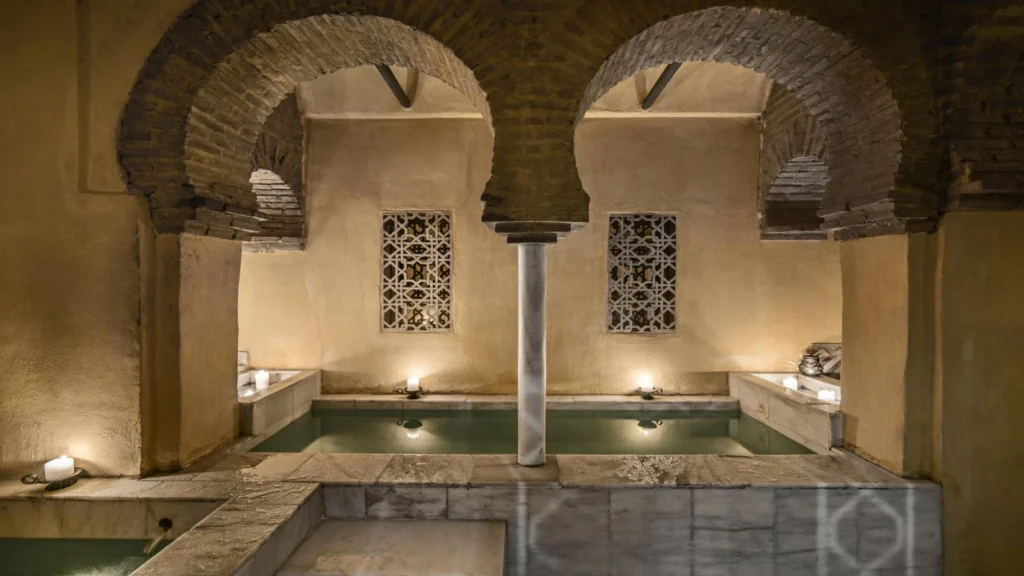
For visitors to Istanbul, knowing a few of these details adds depth to the hammam experience. This guide explores the building, the social tradition and the bathing practices that continue today, before introducing ways to experience the tradition at Felicity Hammam.
What makes a hammam historical?
The history of a bathhouse belongs to a particular building: when it was constructed, who commissioned it, how it was used and what changed over time. An inscription, heritage record or documented restoration can help establish that story.
The bathing tradition has its own history. A present-day hammam may offer traditional practices, while the age and architectural background of its premises require separate evidence. When exploring Istanbul’s bathing heritage, it is useful to ask about both the building and the experience offered within it.
A bathing tradition with roots before the Ottoman period
The hammam developed within a long Mediterranean history of public bathing. The Metropolitan Museum of Art traces that history through Roman baths, their continuation in the Byzantine world and later developments in early Islamic societies. Ottoman bathing culture forms part of this wider history.
Public baths also had a place in community life. They provided settings for meeting and conversation as well as washing. Their layouts and decoration varied between regions, giving individual buildings their own character.
The museum’s history of the hammam offers useful context for understanding this development.
Architectural details to notice in a historic bathhouse
Begin by considering how the spaces connect. Where would a visitor change? How would they move towards the bathing area? Which elements belong to washing, and which provide places to sit or rest?
These terms can help you read descriptions of Ottoman hammam architecture:
| Term | What it helps you recognise |
|---|---|
| Soyunmalık | The changing area associated with preparing for the bath and dressing afterwards. |
| Ilıklık | A warm space that can form a transition towards the hotter bathing area. |
| Sıcaklık | The hot bathing room, where the arrangement of platforms, basins and smaller spaces becomes especially relevant. |
| Göbektaşı | A heated marble platform associated with the centre of the bathing space. |
| Kurna | A water basin used in the bathing area. |
Room names and layouts vary. Research on Turkish hammam terminology highlights overlapping uses of some labels. Treat the glossary as a starting point, then look at the plan and history of the particular building.
Domes and daylight
Look upwards as well as around you. Historic bathhouses can use domes and roof lighting in different ways. For example, the Ministry of Culture’s architectural record for Haydar Hane Hamamı in Bursa describes domed spaces with lighting features above them.
When visiting a bathhouse, notice where daylight enters and how it falls across the interior. The relationship between the ceiling, openings and stone surfaces is a useful part of reading the architecture.
Platforms and basins
The göbektaşı and kurna serve different purposes within the bathing space. The platform provides a heated surface, while the basin is part of washing with water. Recognising these elements helps you understand the room through its use.
In architectural photographs, look at how these elements relate to one another. Their position can help you follow the organisation of the bathing area, even before you see a floor plan.
The social life behind the architecture
GoTürkiye’s account of Ottoman hammam culture describes gatherings, conversation and ceremonies associated with bathing, including bridal traditions. It also notes the role of patrons and charitable foundations in commissioning some bathhouses.
This social history adds another dimension to the spaces. A changing hall, for example, belongs to a wider visit that includes preparation and time spent around other people. The experience extended beyond the act of washing.
Objects tell part of that story too. Bathing bowls, wraps and towels connect the scale of the building with the everyday actions of its users. Looking at both architecture and objects gives a fuller picture of hammam culture.
An Istanbul example: the Bayezid II bathhouse as a museum
A historic hammam building may now have a different use. Istanbul’s Bayezid II bathhouse was restored and opened as a hammam culture museum in 2015. Its documented layout includes changing, warm and hot sections.
The Bayezid II Turkish Hamam Culture Museum presents bathing objects alongside the building itself. It offers an example of how a bathhouse can preserve and explain cultural heritage through a museum setting.
If you plan a heritage visit, check the venue’s current visitor information. A museum visit and a bathing appointment offer different ways of engaging with the tradition.
Connecting heritage with a hammam experience today
Understanding the architecture can make the bathing ritual easier to appreciate. Water, marble, a textured kese mitt and soap foam are tangible elements you can recognise in descriptions of the tradition.
Contemporary services may combine these elements with additional massage or private arrangements. The treatment menu explains the experience available today; the building’s documented history explains its architectural past. Reading both gives you a clearer understanding of the place you choose.
Explore the bathing tradition at Felicity Hammam
Felicity Hammam’s Traditional Turkish Hammam introduces the bathing ritual, with the site’s service descriptions including kese exfoliation and foam treatment. You can explore the current service options to decide how you would like to experience it.
The business has Old City Sultanahmet and Historical Pera Taksim branches. Choose a location that fits your Istanbul plans, then confirm the selected service, appointment details and entrance address when arranging your visit.
Frequently asked questions
Did the hammam tradition begin in the Ottoman period?
Its history extends further back. Roman and Byzantine bathing traditions and developments in the early Islamic world form part of the background to the hammam culture later associated with Ottoman cities.
Does every historical hammam have the same layout?
No. Room arrangements, terminology and architectural details vary. A glossary helps you identify features, while a building-specific history or plan explains how they work together in that particular bathhouse.
Does a traditional treatment establish the age of a building?
The treatment and the building’s age are separate questions. A venue’s heritage records, construction history or restoration documentation provide information about the structure itself.
Can I learn about hammam heritage without booking a treatment?
Yes. Museum collections and documented heritage sites can help you explore bathing architecture and objects. The Bayezid II Turkish Hamam Culture Museum is one Istanbul example to research when planning a cultural visit.
Historical sources and further reading
- The Metropolitan Museum of Art: Baths and Bathing Culture in the Middle East
- Ankara University journal: A Terminological Approach on Turkish Hamam Spaces
- Türkiye Culture Portal: Haydar Hane Hamamı architectural record
- GoTürkiye: Turkish Hamam Culture and Heritage
Bring a deeper understanding of bathing culture to your time in Istanbul. Visit the booking page to arrange your Felicity Hammam experience.